
Belonging(s): “A close relationship among a group and personal or public effects
“Asco wequassinummis, neetompooag” (Hello my friends)!
Welcome to another installment of the Belongings Blog’s From the Archives series where Collections and Archive Manager Anthony Belz shares some of the most interesting items from the Tomaquag Museum Archive. In this installment, we will be sharing the origin story of our taxidermy Tummuck or beaver. Tomaquag is the plural-beavers, which Red Wing dubbed the beaver’s name. It has been on display for 46 years in the museum. Tomaquag, our namesake from the museum’s original location in Tomaquag Valley in Hopkinton has served as our mascot and was used extensively in the museum’s identity and marketing materials beginning in late 1980 and lasted more than 30 years. As part of our new upcoming exhibit, Revolution to Reclamation, Freedom through Indigenous Sovereignty which tells the history entwined with the United States Semiquincentennial from an Indigenous perspective (Opening April 22, 2026). The beaver needed to be retired from view. Her age and the deterioration of the taxidermy process over the past 46 years, gave her less than a perfect appearance, so it was her time to be put into long term storage. Ahead of the installation of the new exhibit Tomaquag was retired from display, receiving conservation and put into storage for the first time since she arrived in the Spring of 1980.
According to Red Wing, Tomaquag’s story begins around 1977, when a contingency of Smithsonian Institution staff visited the museum. Below is an excerpt from an undated entry in Red Wing’s autobiographical notes:
“A committe[e] from the Smithsonian Inst. in Washington D.C. came to the museum and asked if they could do anything for us. I told them, I’d like a stuffed beaver because Tomaquag means beaver in the Narragansett Tongue. We started on Tomaquag Heights we kept the name Tomaquag Indian Memorial Museum.
It took them 2 years to find a beaver. They located a place in Oregon. The man there promised them the first one something happened to, as they do not kill unnecessarily.
A car hit this one, so they froze it for 2 months; then shipped it to the Smithsonian in Washington, D.C. In the dept of Natural History there, they cured it and mounted it and a committee from there brought it to us in 1980.
A month before because a man from Conn. gave us a glass case to use in museum. When the beaver came it just fit into that case. Perfectly. We had a dedication of it and Barbara Gilbert of Smithsonian told of the process of securing this beaver. It was quite a story and humorous.
A man from Smithsonian pictured the beaver and Princess Red Wing giving the blessing and wrote up the whole story for the Smithsonian magazine for Aug 1980. Many read it and came to the museum to see the beaver. Painted Buffalo had painted us a picture of a beaver & we had toy beavers, but now a real one was a great addison [addition]. A lady brought a small one a short time ago and said, “Your school children can not pat the beaver in the case, but you can let the little ones pat this one!” It is of soft fur. So we call him Baby Tomaquag.
As the story goes, Red Wing contacted a friend from Washington D.C., Barbara Wheeler Gilbert, who then in turn contacted Gene Behlen, Chief of Exhibits at the Smithsonian’s Museum of Natural History. Behlen thought that this request would be a great opportunity to test the capabilities of a relatively new taxidermy technique—vacuum sealed freeze drying. But first, they needed to locate a specimen-one that had not been killed deliberately for this purpose- but had met its demise by circumstance. Enter a Oregon trapper named James Bond. Bond soon located an adult female beaver that had been struck and killed by a car and had minimal exterior wounds-only a broken leg and the fatal trauma to the beaver’s head. Bond packed it in dry ice and shipped it to Dr. Rowland Hower, an expert in the vacuum freeze drying method of preserving eventually would treat the specimen for the taxidermy process in which all of the moisture is slowly and completely removed from the body.
Below are the statistics that were used as accompanying text while Tomaquag was on exhibit in the late 1990s. The information is derived from the original data from the Smithsonian’s Freeze-Dry Laboratory.
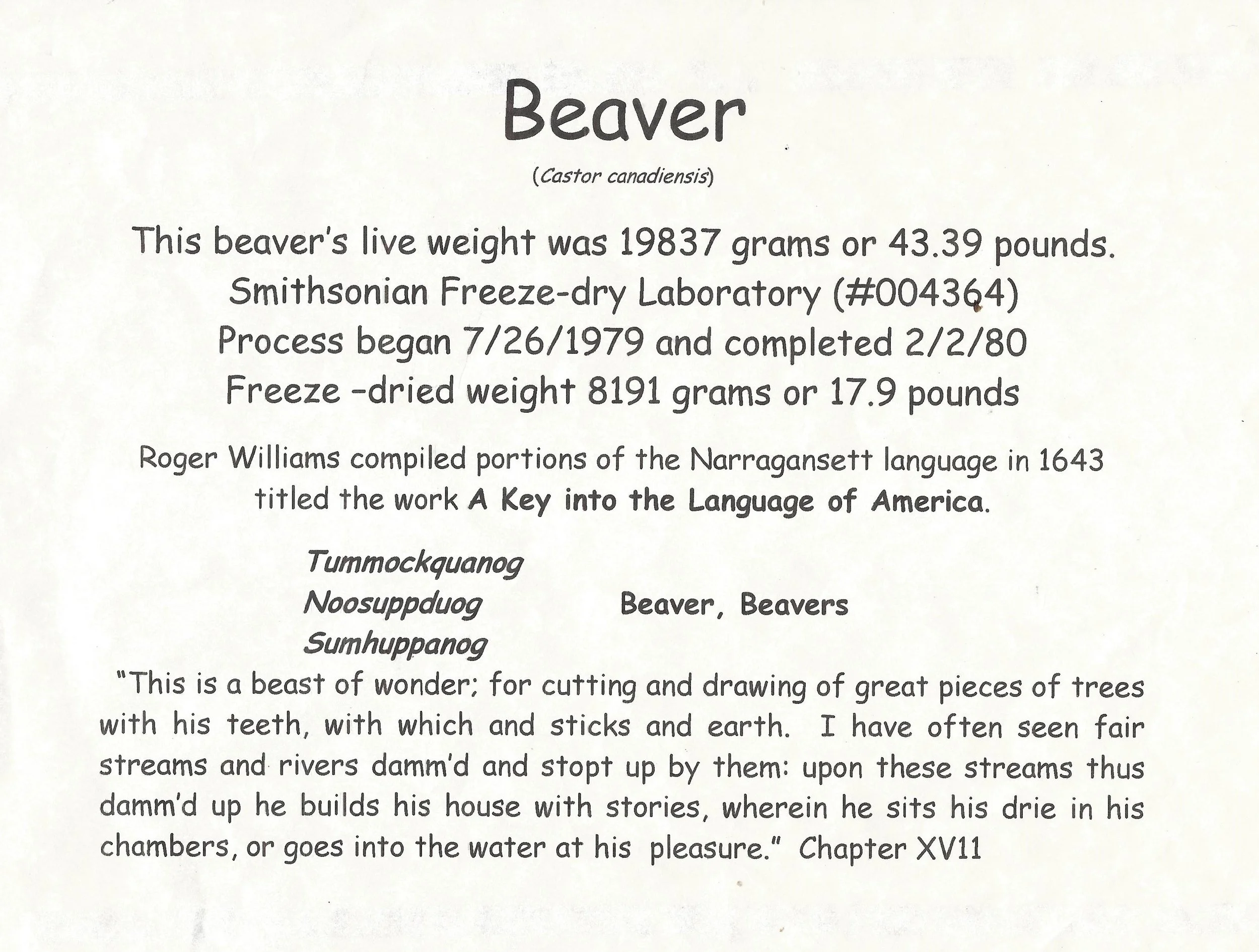
Tomaquag Exhibit Text. ca. late 1990s. Tomaquag Museum Archives.
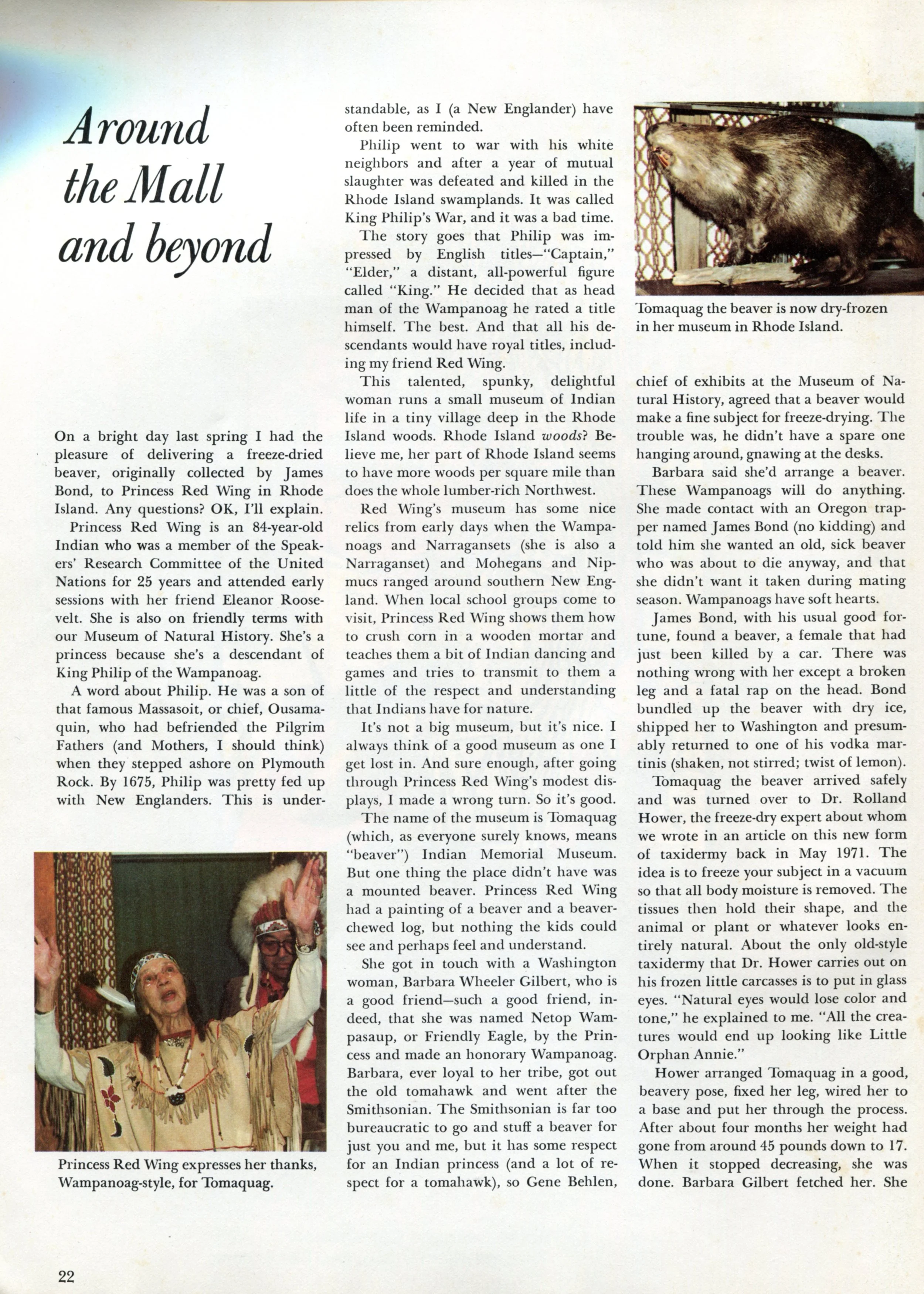
Around the Mall and Beyond. Smithsonian Magazine. Page 22. August 1980. Tomaquag Museum Archives.
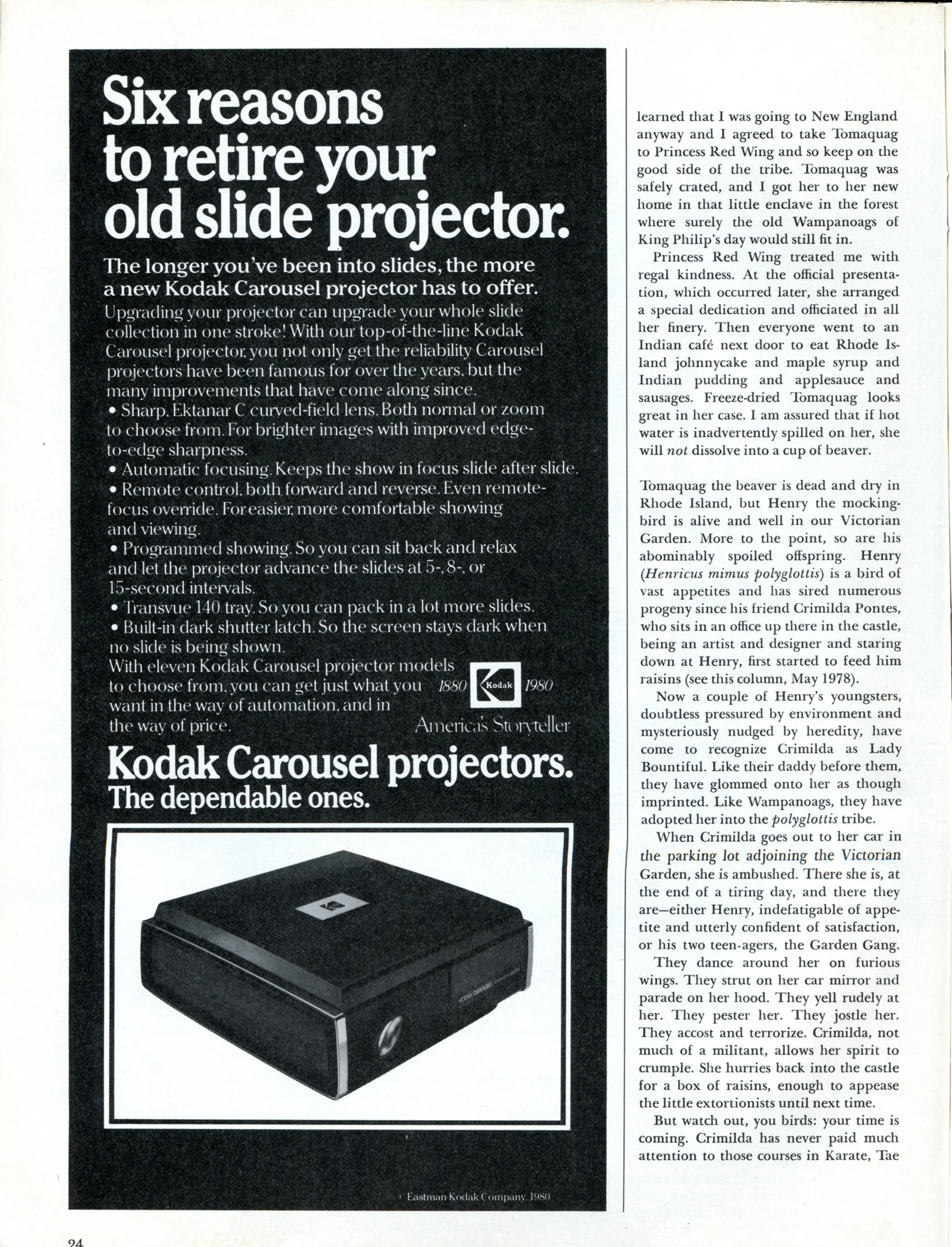
Around the Mall and Beyond. Smithsonian Magazine. Page 24. August 1980. Tomaquag Museum Archives.
Around the Mall and Beyond. Smithsonian Magazine. Page 25. August 1980. Tomaquag Museum Archives.
Immediately after receiving Tommuck, the Tomaquag Museum commissioned an artist to create a branding logo that was used exclusively through the 1980s until the 2000s. Below are examples from 1980 to the early 2000s.
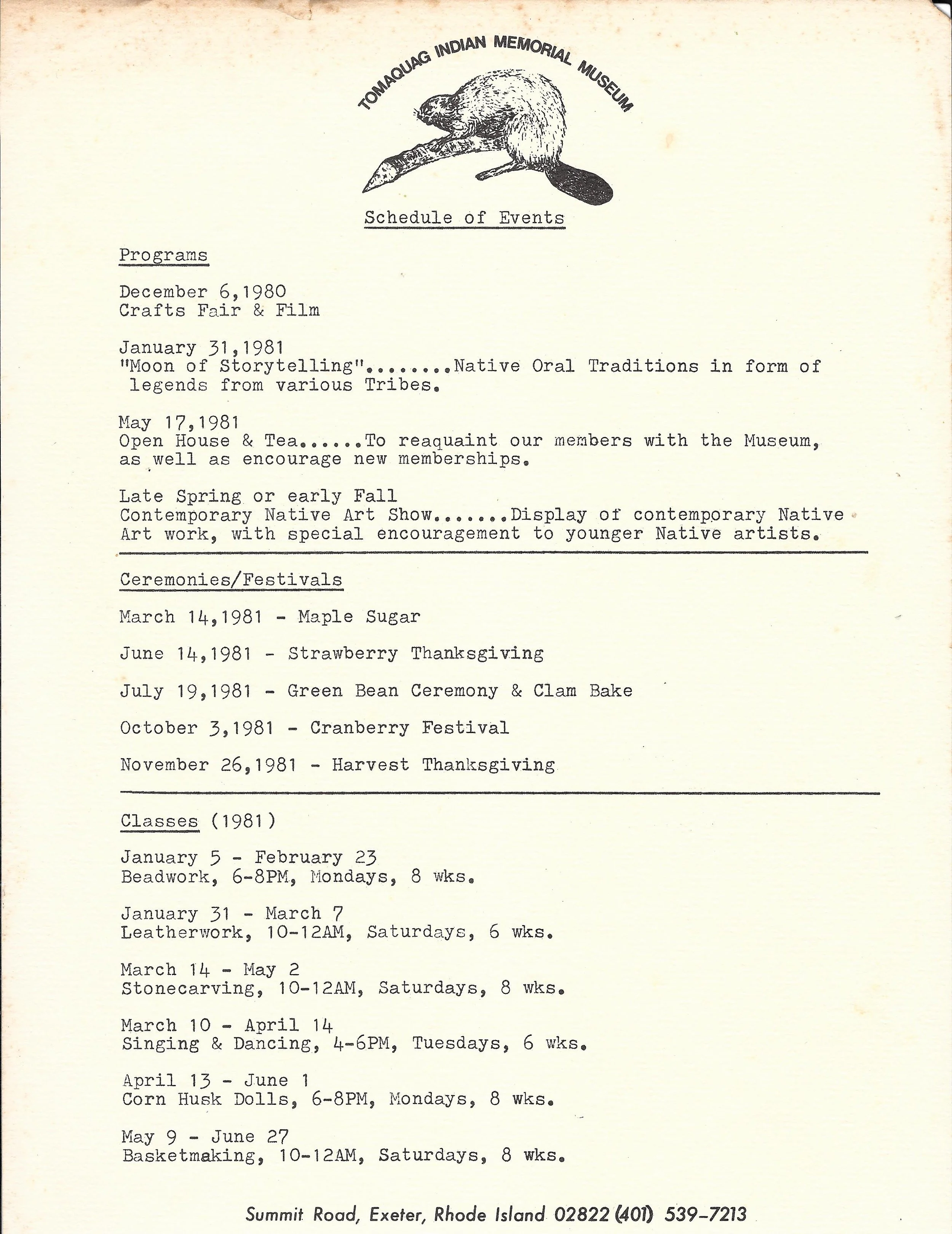
Tomaquag Museum Schedule of Events, 1980-1981. Tomaquag Museum Archives.
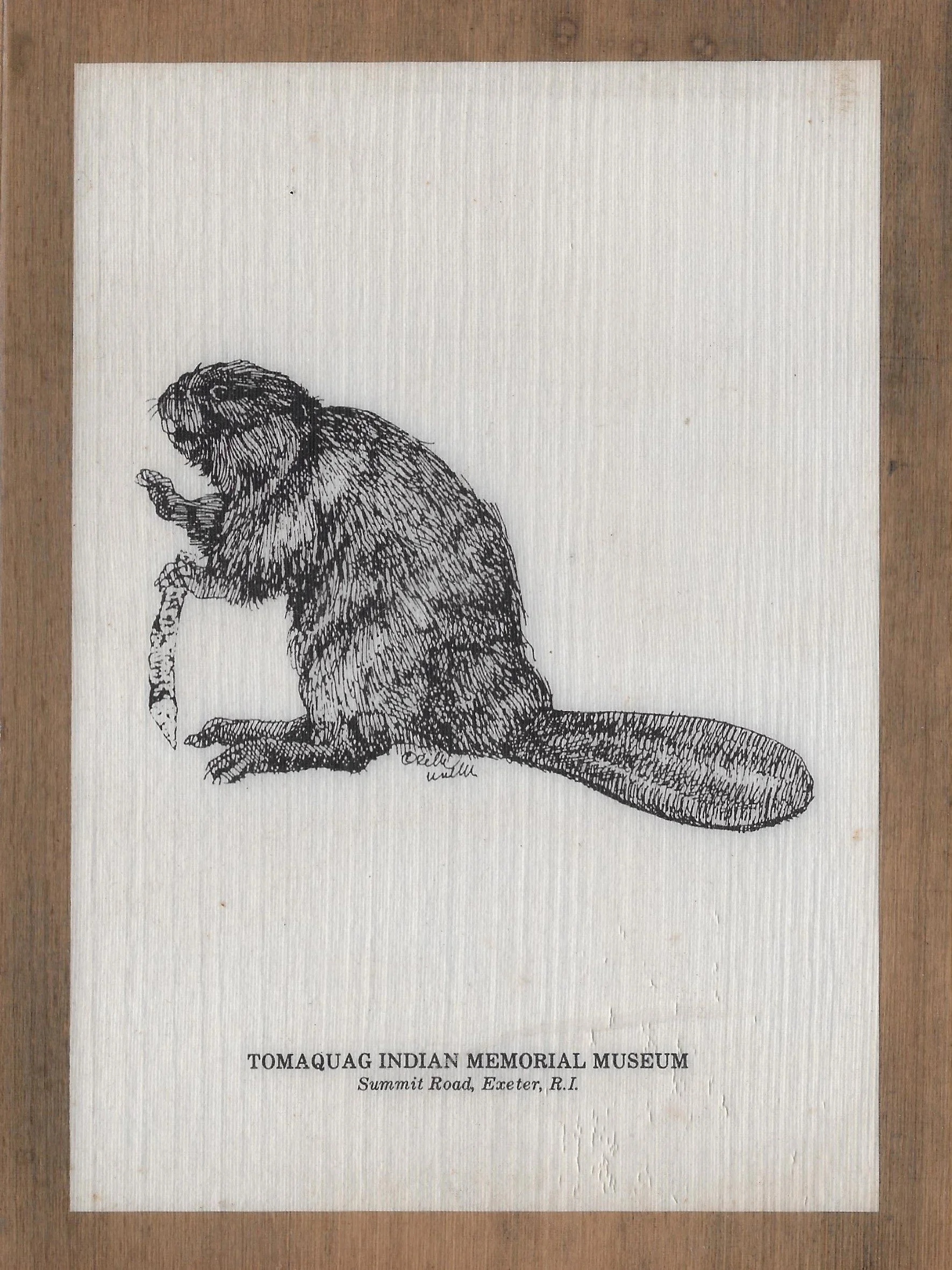
Tomaquag Indian Memorial Museum Plaque. ca. early 1980s. Tomaquag Museum Collections.
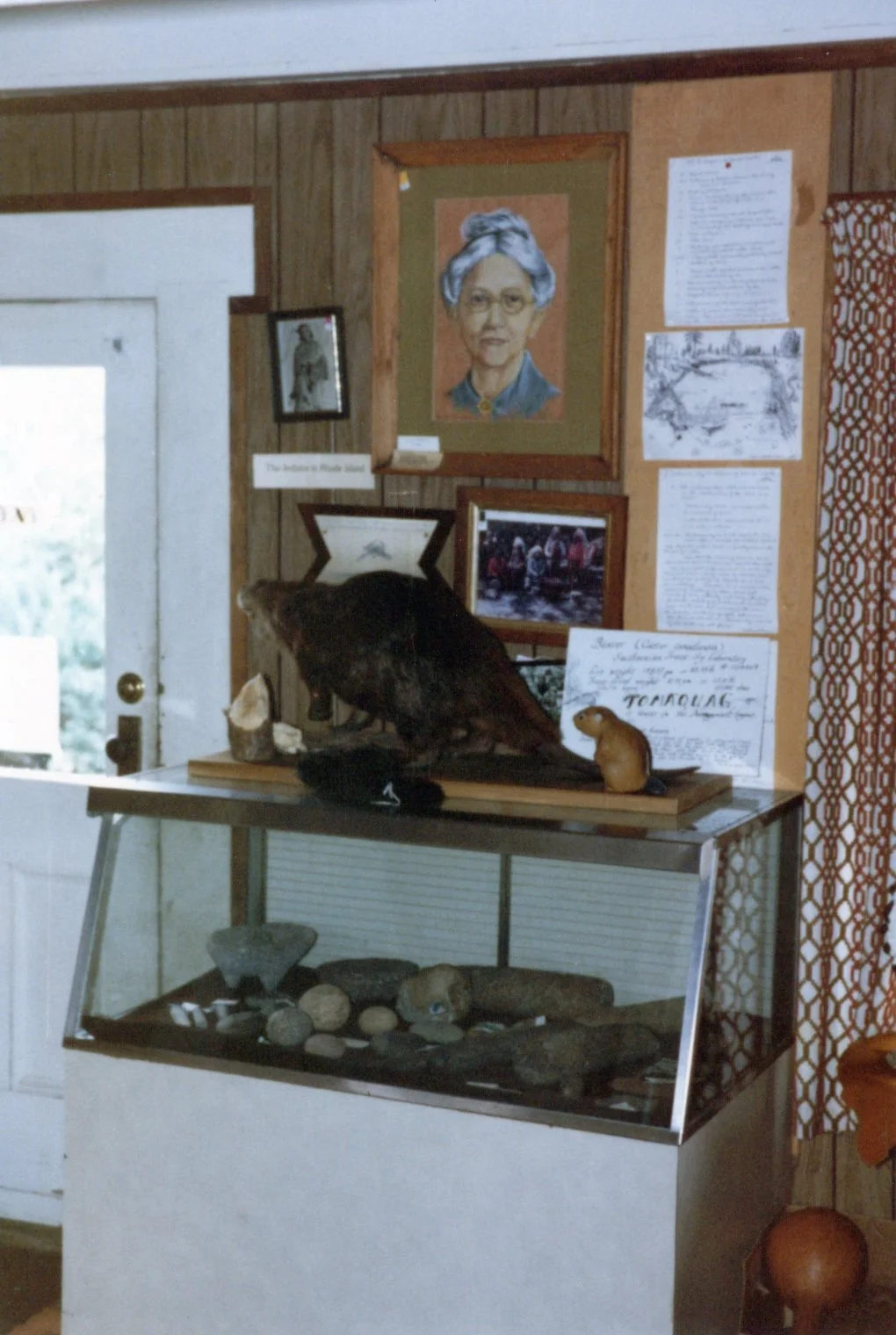
Tomaquag and Baby Tomaquag on Exhibit. Tomaquag Museum. 1982. Tomaquag Museum Archives.
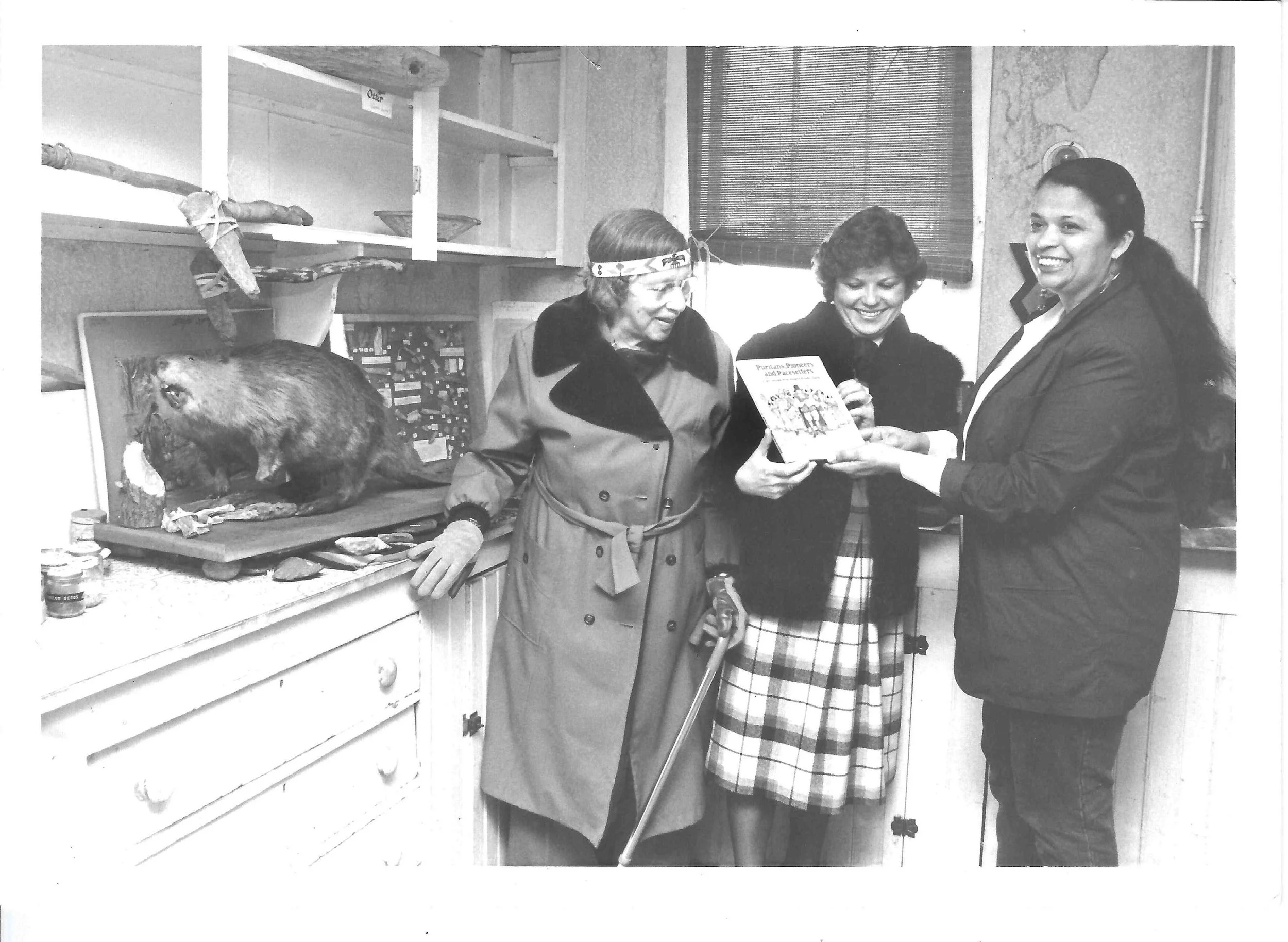
Tomaquag, Red Wing, Unknown Woman (Possibly Marie Fontaine) and Dawn Dove at the Tomaquag Museum, 1986. Tomaquag Museum Archives
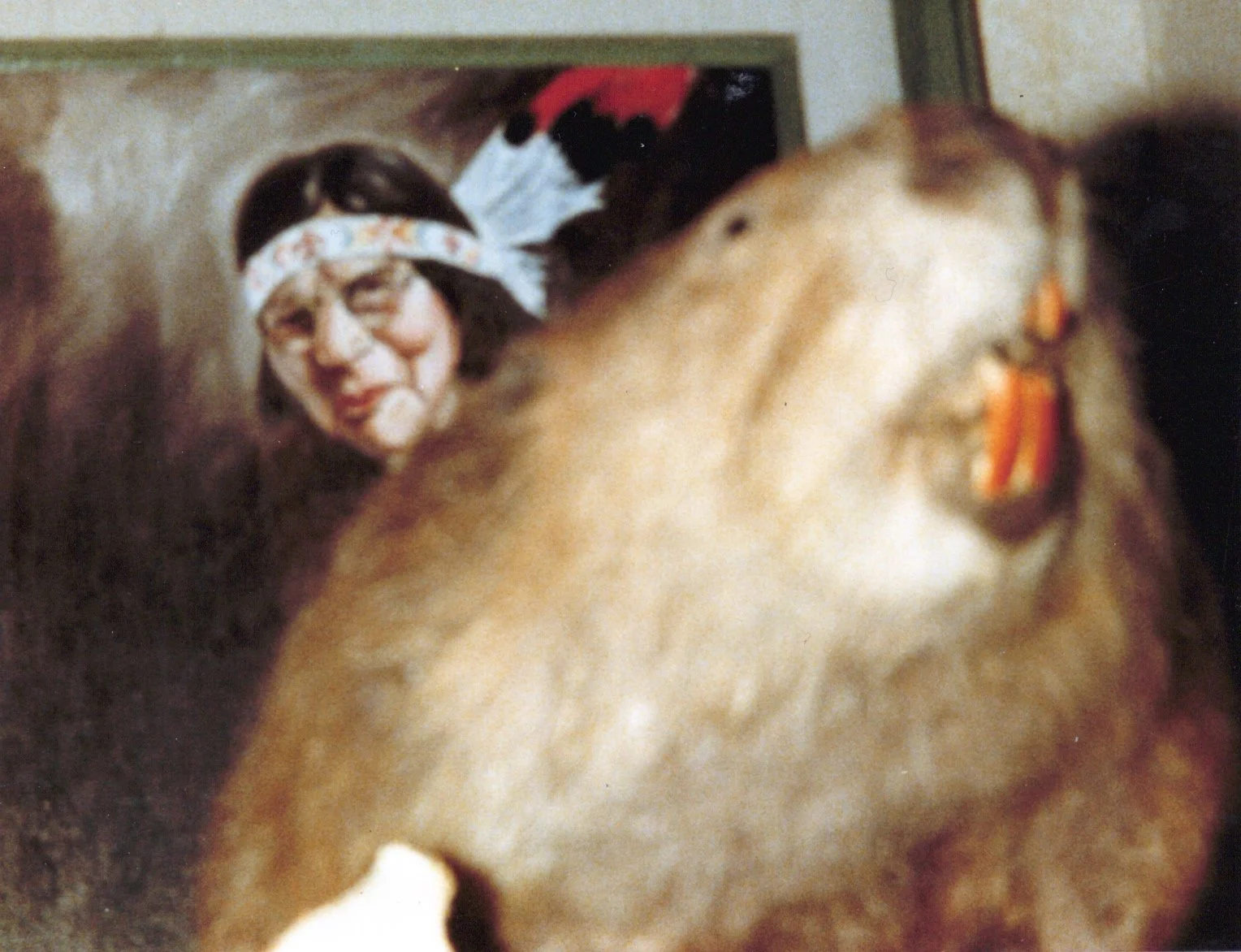
Blurry Image of Tomaquag with a painting of Red Wing in background. Taken by an unknown grade school student, 1985. Tomaquag Museum Archives.
Tomaquag Museum Envelope. ca. early 1980s.
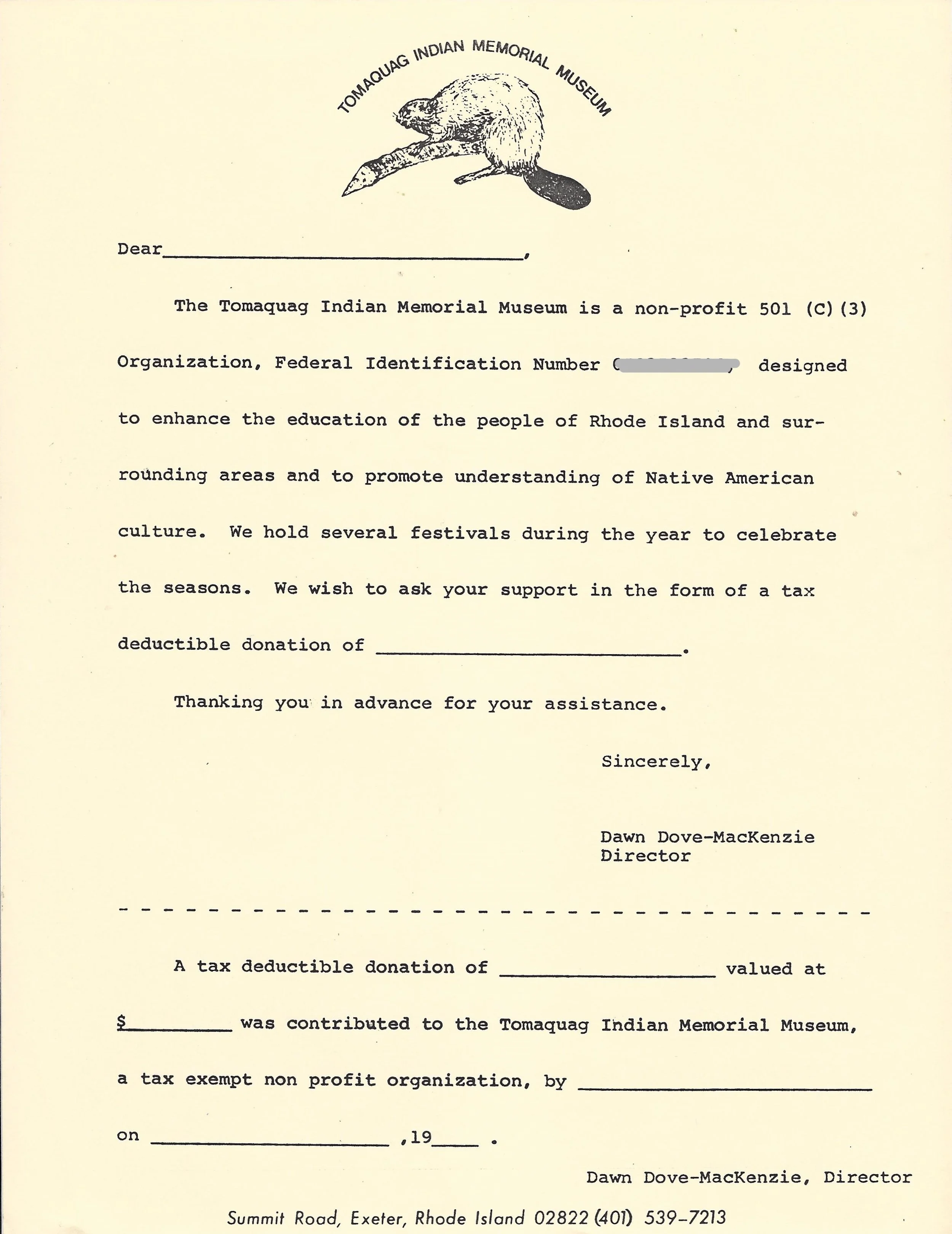
Tomaquag Fundraising Mailer. ca. mid-1980s. Tomaquag Museum Archives.
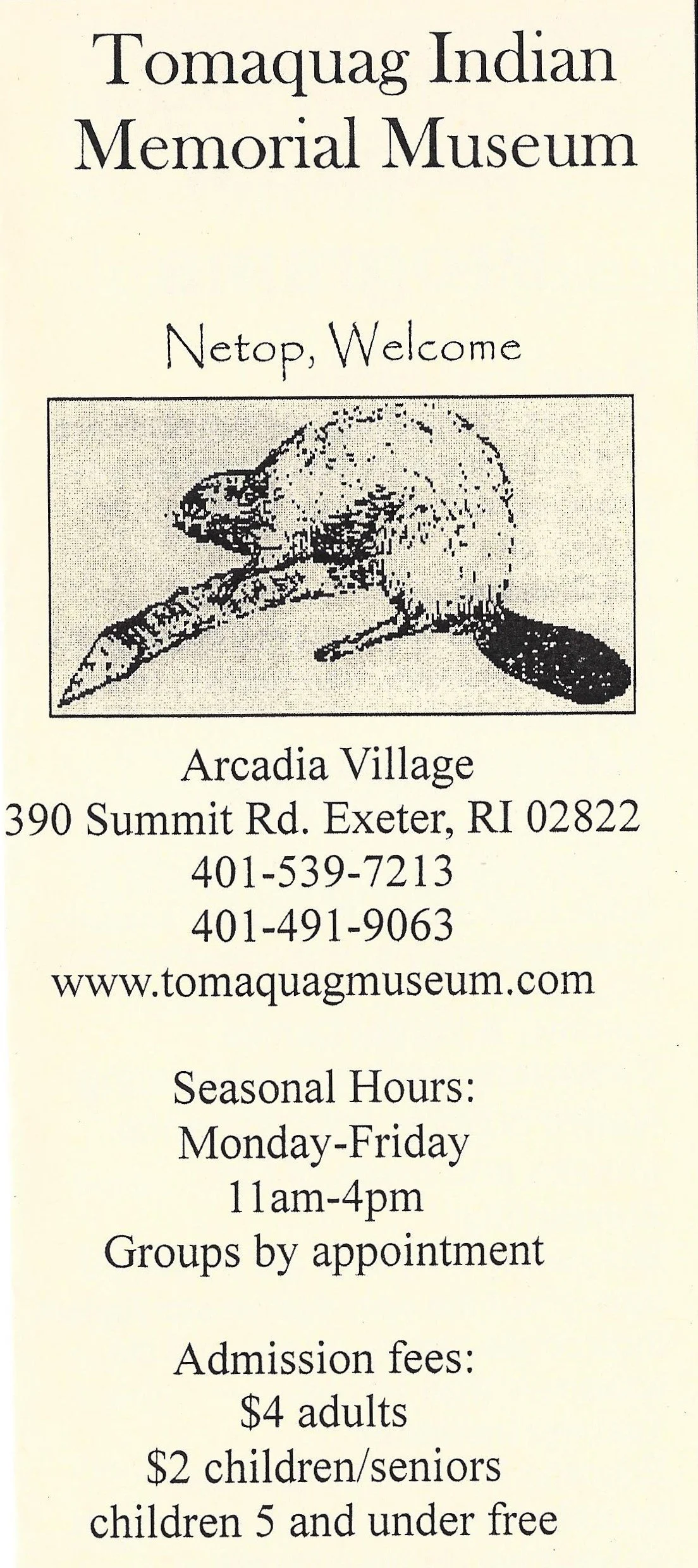
Tomaquag Museum Brochure. Early 2000s. Tomaquag Museum Archives.
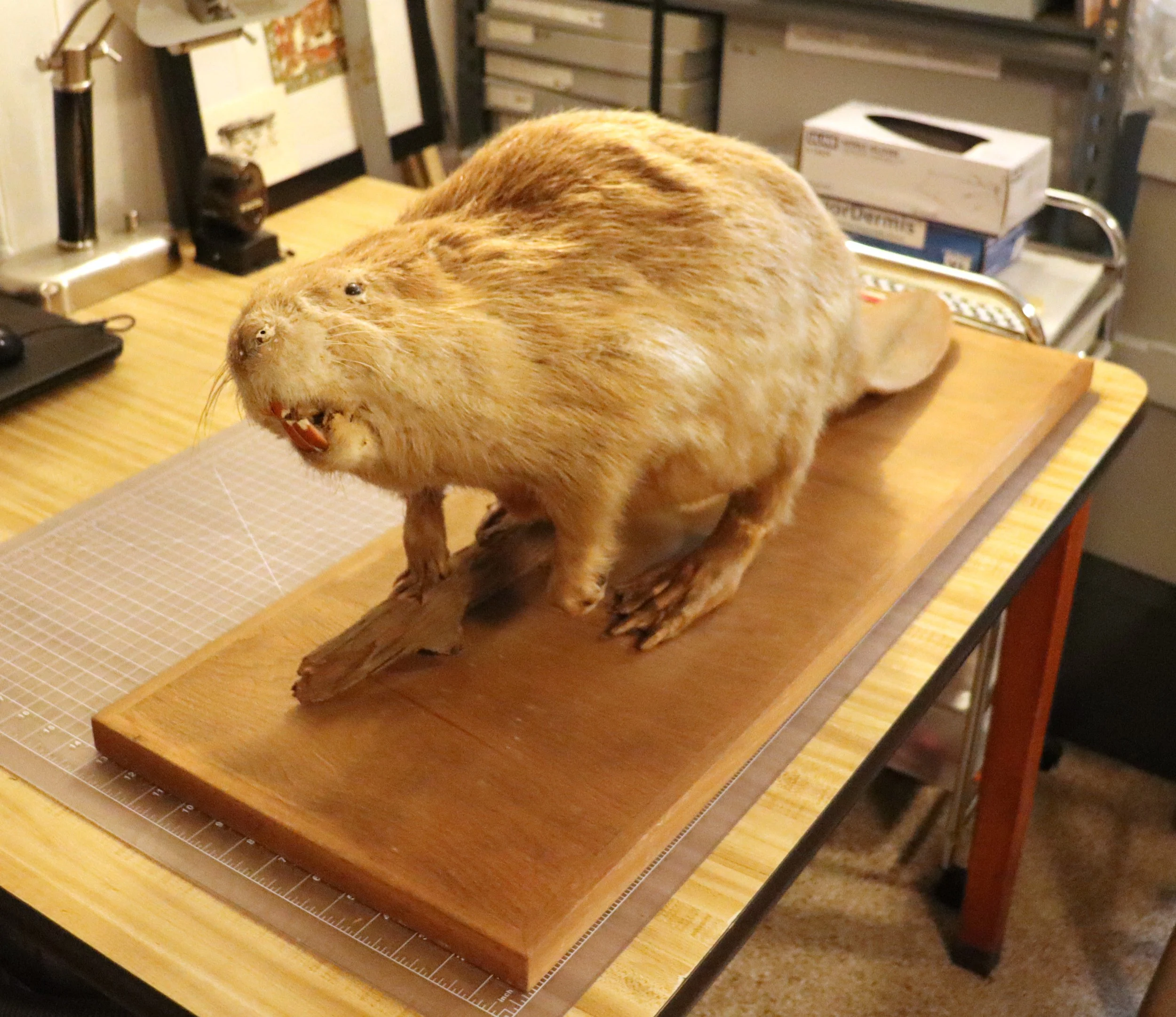
Tomaquag in March 2026. Front Facing View. Tomaquag Museum Collections.
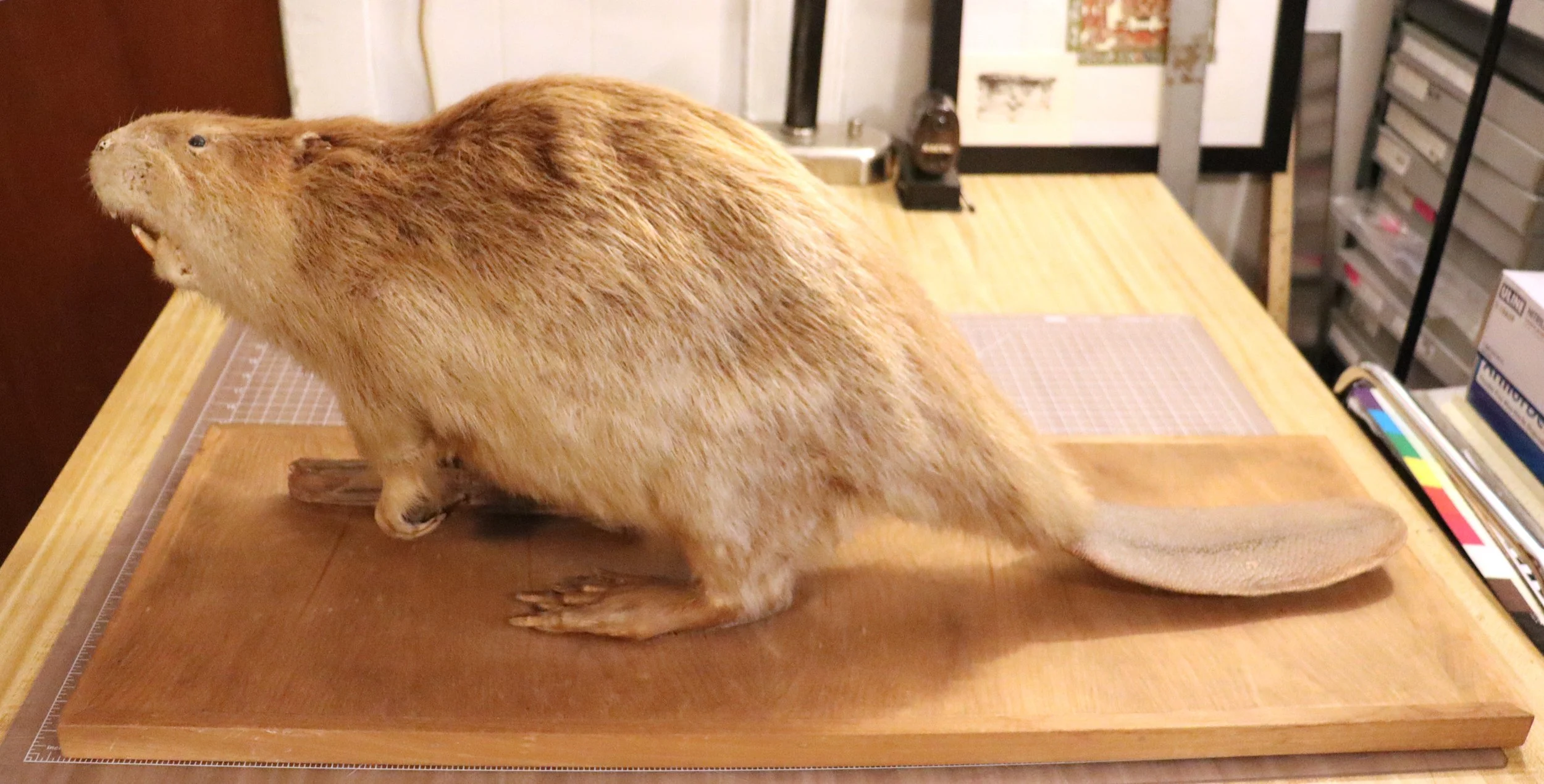
Tomaquag in March 2026. Side View. Tomaquag Museum Collections.
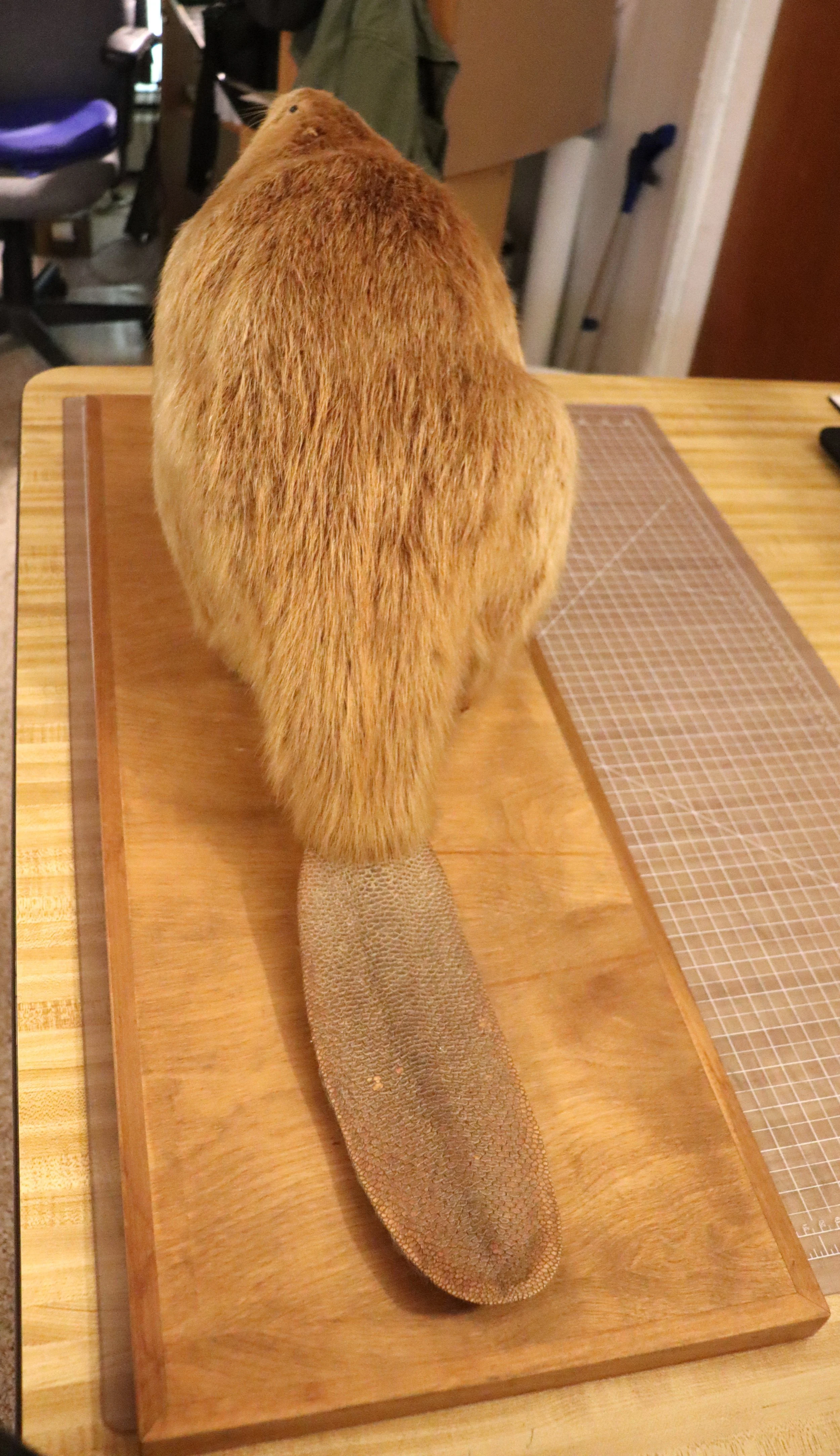
Tomaquag in March 2026. Rear View. Tomaquag Museum Collections.
Peesh Kunash, See you later Tomaquag! Kutaputush, thank you for being our mascot for so many years!