Who Comes From the Ocean?
Belonging(s): “A close relationship among a group and personal or public effects
“Asco wequassinummis, neetompooag” (Hello my friends)!
Asco wequassin netopauog. Ntussawese Nishkeneneau. Hello friends, my name is Nishkeneneau. I am a member of the Narragansett Tribe and daughter of the late Wenonah Brown; Medicine Woman and Indian Child Welfare Director/Activist. Granddaughter of Dr. Ella W. T. Sekatau, Medicine Woman and Tribal Ethnohistorian. Both women were path blazers for my people; a strong and intimidating legacy to live up to yet thrilling to add to.
I am currently the Ocean Nexus Fellow here at Tomaquag Museum, and live in the beautiful homelands of the Narragansett Tribe. This being my very first "blog" about something I love and are passionate about, I would like to take a moment to dedicate it to my beautiful Niece Iylah Nonahlyse Big Horse. Like the ocean she is a strong and graceful being, a force to be reckoned with; and like the ocean she is magnificent. Cowammaunsh.
Growing up I was taught many stories from my grandmother and her mother, my great aunts, my mother and her sisters. I had the great opportunity to be raised by these women and in their own ways each taught me something about who we are as Narragansetts and as women. My grandmother taught me that our people believed that in ancient times our strongest of healers male and female, came from the ocean "Paumpágussit", having the ability to walk amongst the two legged and four in spiritual form.
"The ocean gives us so much little Neneau" my Grandmother Ella Sekatau would tell me. "She gives us food, stones for tools and adornment, plants for more medicine and to use in creating our homes. Her waves sing to us, and the beings that live in her great water guide us through our life. Like her sister Sanaukamûck (Earth Mother) she provides for all her children, and uses the salt water to heal our achy muscles and relax our spirits"
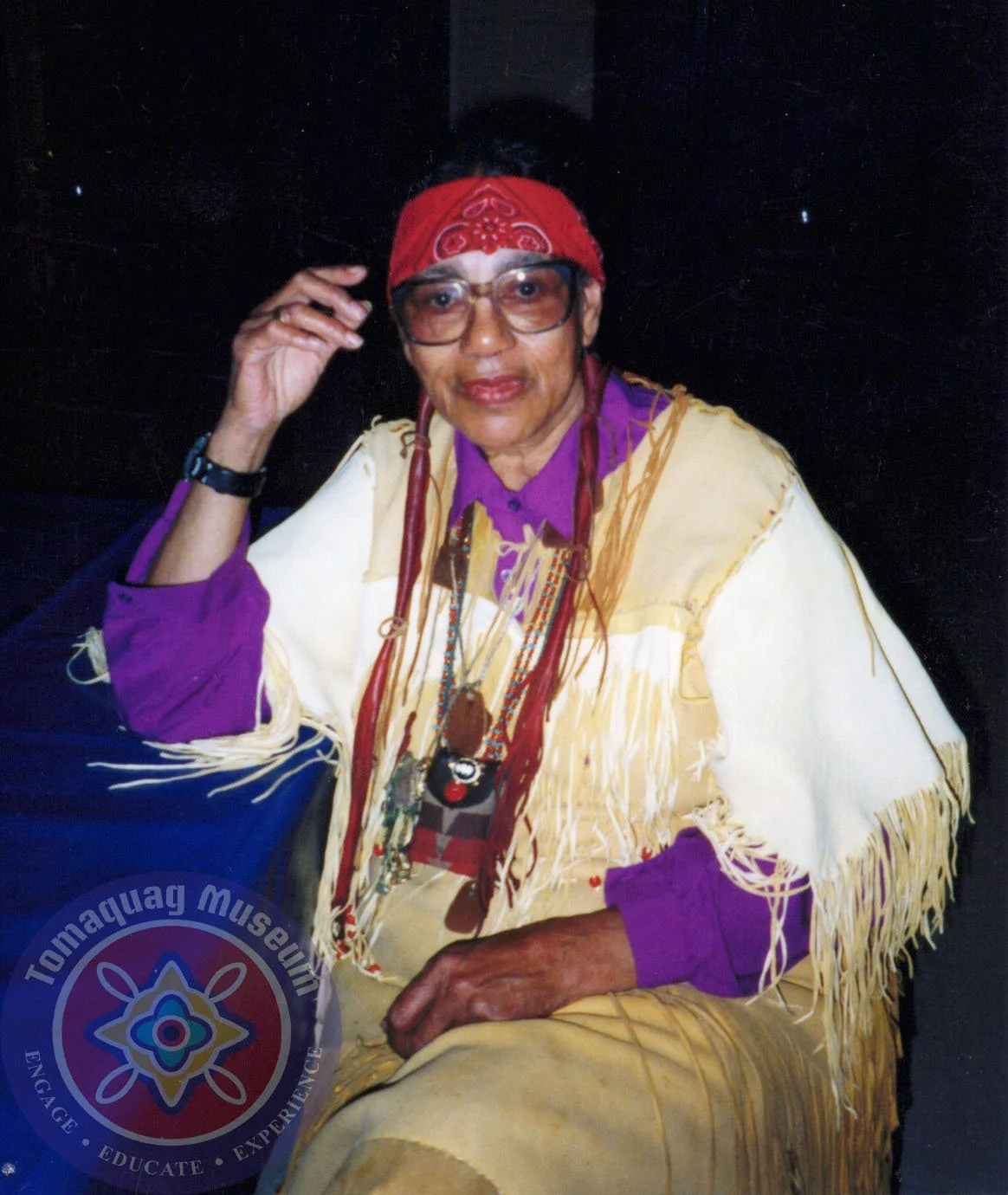
Dr. Ella W.T. Sekatau. ca. 1990s. Tomaquag Museum Archives.
"But gran" a much younger me would say "what tastes good that comes from the ocean?" My grandmother would reply "well Neneau, theres the ashaûnt-teaûg (lobster) which is my favorite, or the pouhquauhhaug (commonly known as quahaug) that I know you like (as a child I did) and the beautiful shelled oppnenauhock (oysters) that your mom loves in stews."
"We would just eat them gran?" I'd ask semi sickened by the thought of eating lobsters. (I never had a taste for seafood, when it was all that was cooked I ate it BUT the smell and texture just never sat right with me. My family to this day still teases me and says "what kind of Gansett are you" my response though short always the same "the most interesting kind")
"Ohh no, once the shells were cleaned we had so many uses for them. Nothing went to waste, the shells would be used for the creation of clay, or bigger shells were used as bowls or cups or even to till the earth for planting. We would use our tools to make beads from the beautiful purple and white of the quahaug, creating pieces of intricate beauty for those we love. We honored the ocean by wearing her gifts and singing her songs."
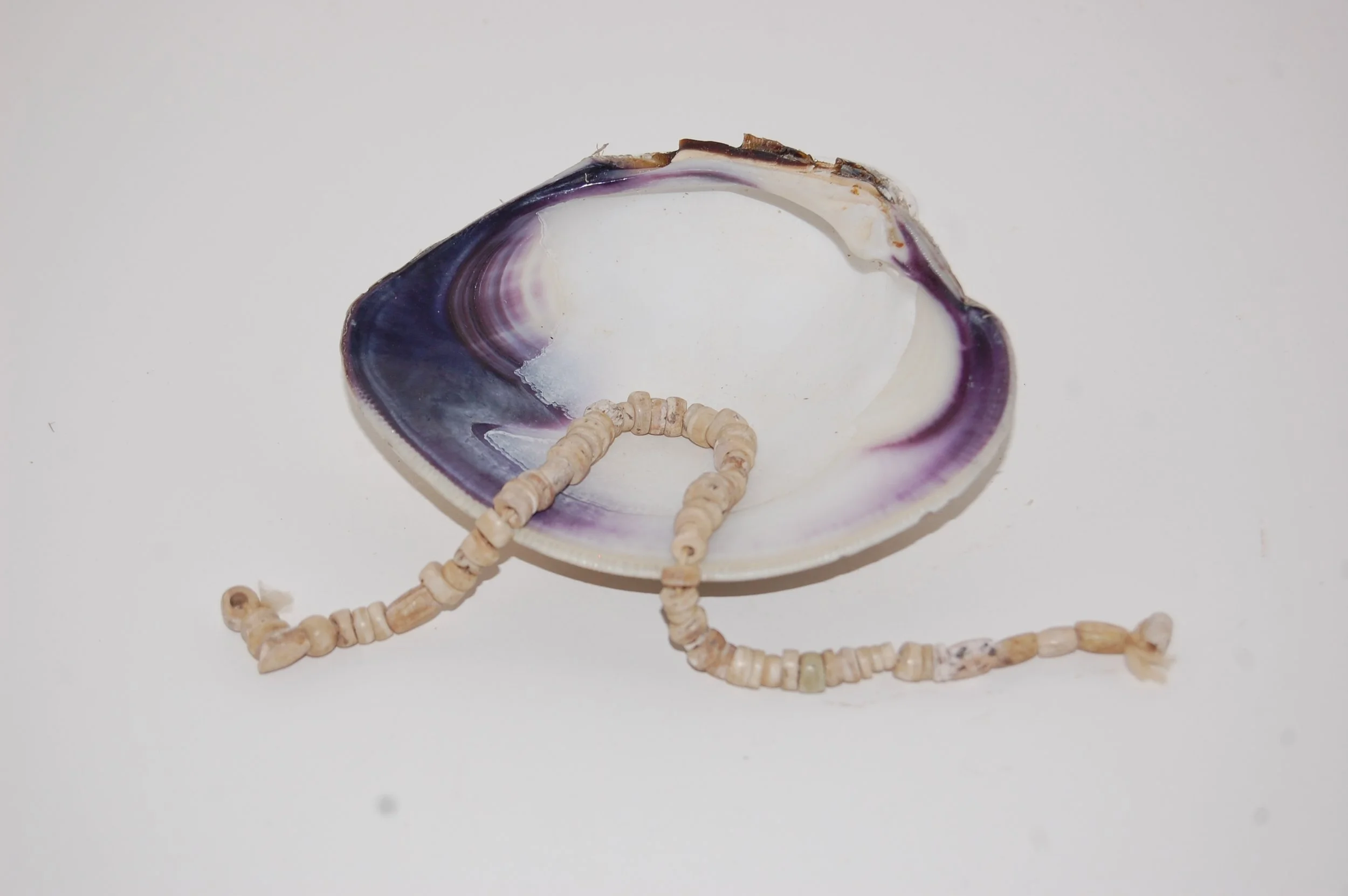
Quahaug Shell and Wampum Bead Braclet. Tomaquag Museum Collections.
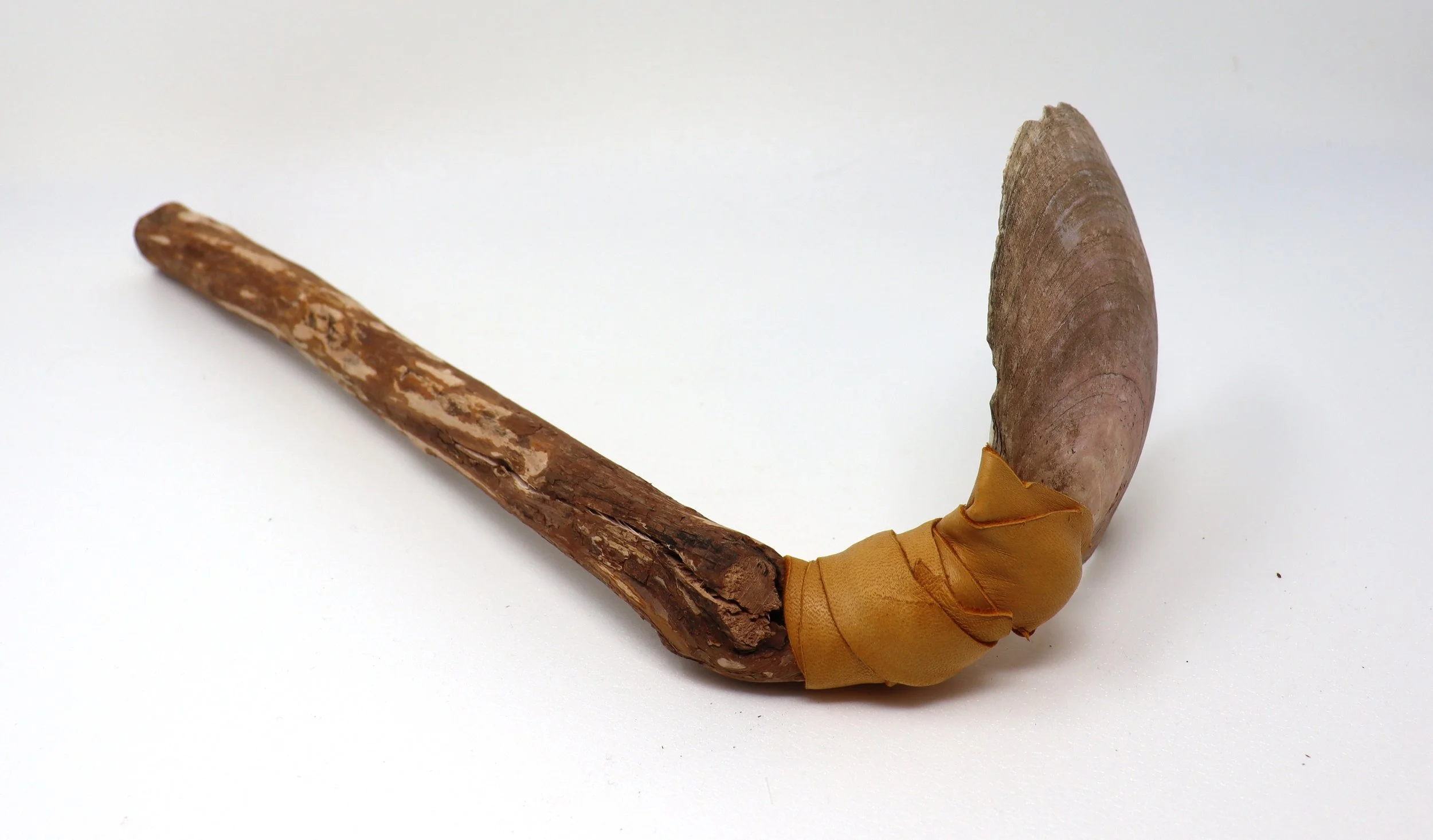
Shell Hoe. Robin Spears III. Tomaquag Museum Collections. [2024.25.4]
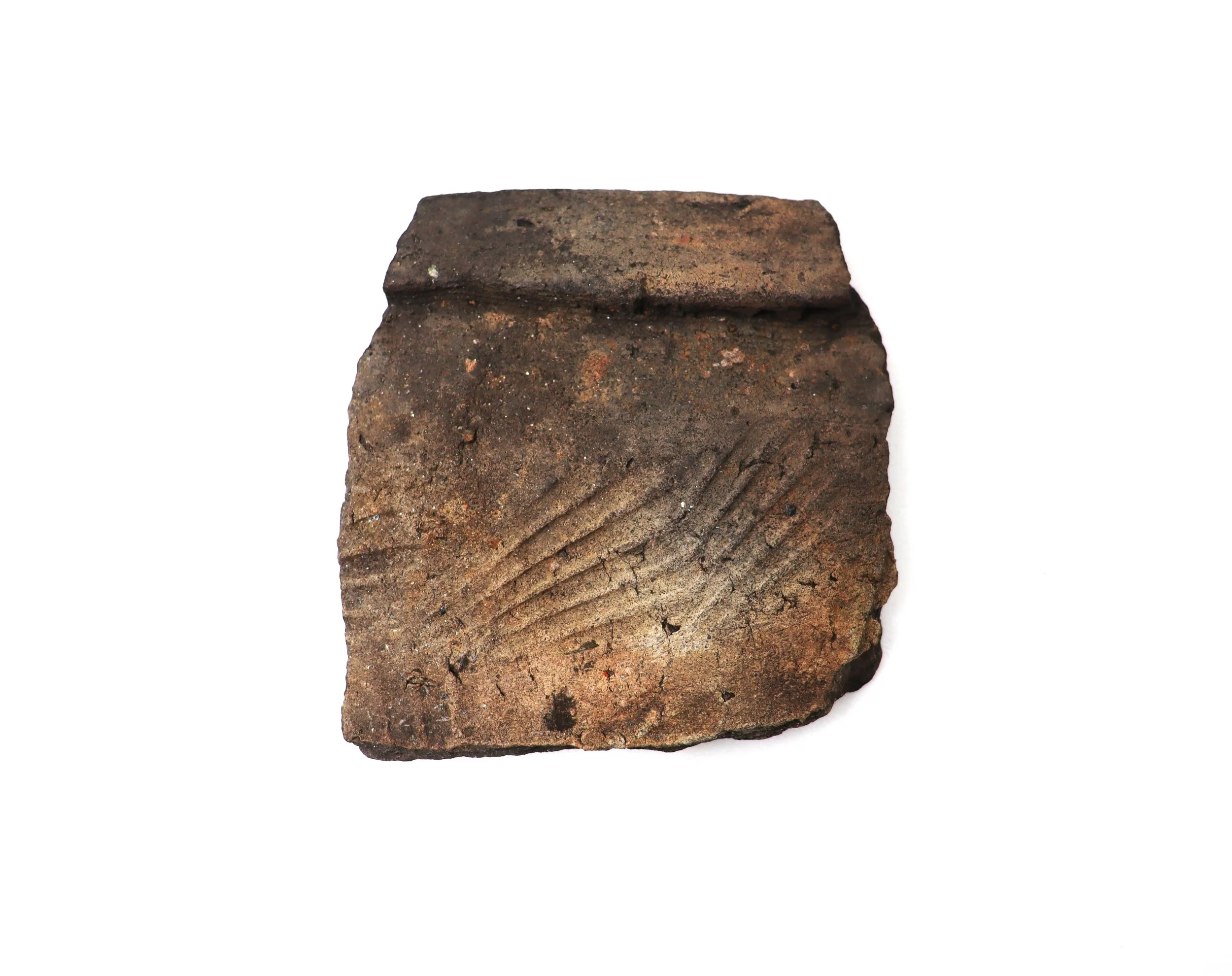
Shell Stamped Ceramic Sherd. Tomaquag Museum Collections. [1982.23.144]
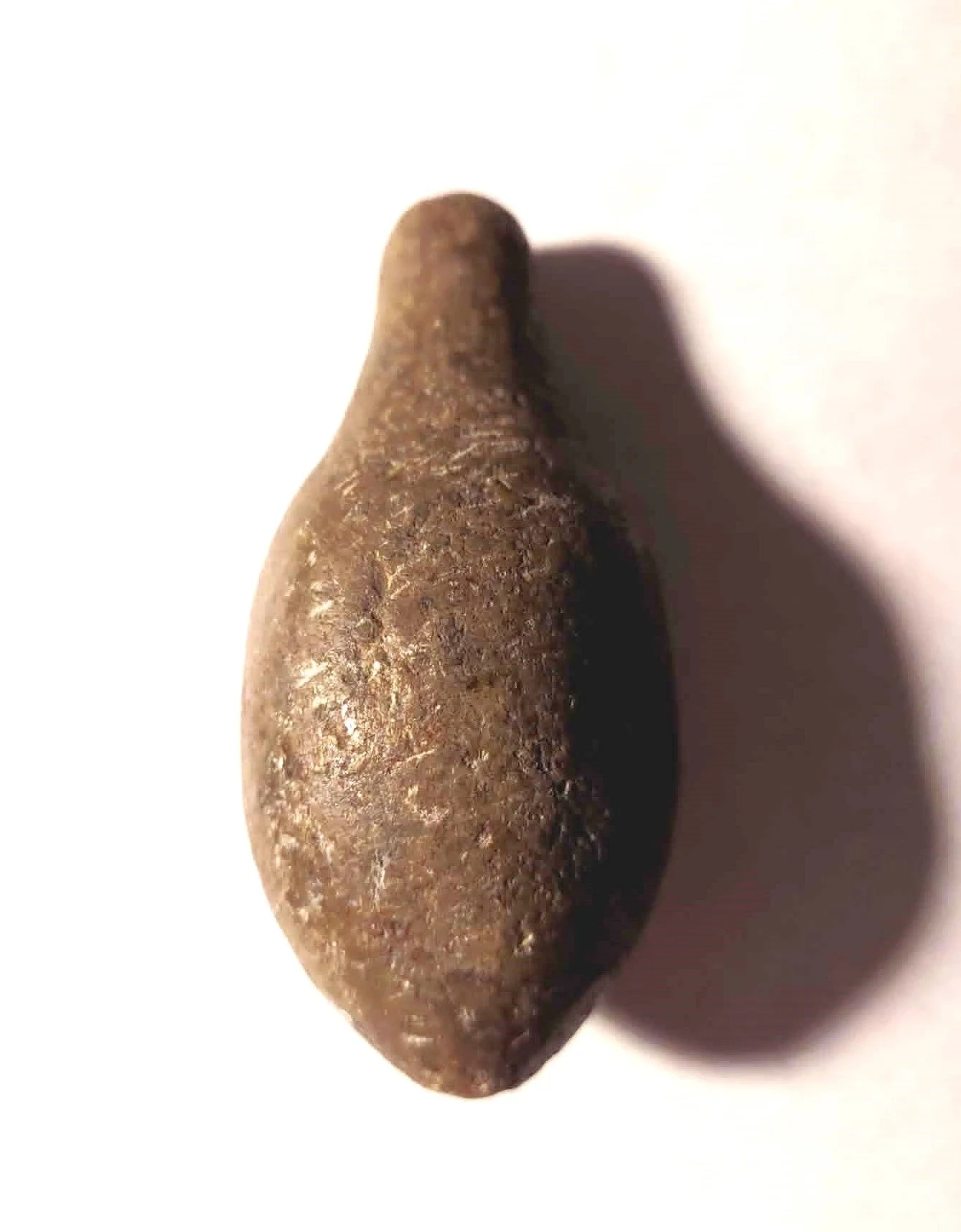
Stone Fishing Plummet. Tomaquag Museum Collections. [1981.71.16]
The older I became the more I started to study the ocean, how she connects with the moon's cycle and how her waves rise and fall with the moon. I started to understand the great importance the ocean has to us as Native people but also the fact that we have to protect her and all the beings that dwell there. Not just learning about the animals in the ocean but also how important they are to the ecosystem.
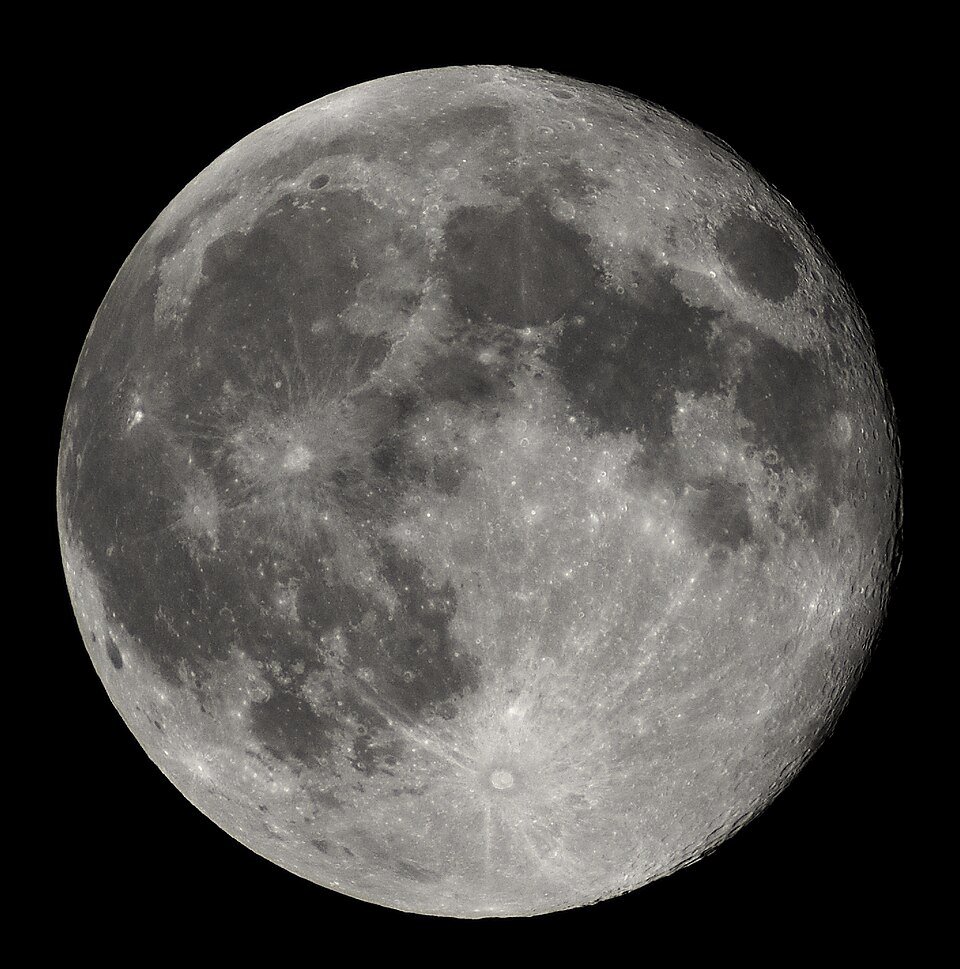
Earth’s Moon. Wikimedia Commons.
By definition the term "human ocean nexus" refers to the interconnected systems of biological, economic and social processes that link human activities with ocean health, while some human actions directly modify oceanic systems. Our responsibility is to shift our dedication to the ocean as her protectors towards stewardship, and sustainable management. Protecting the marine life in our beloved ocean from over fishing, pollution from ships and drainage.
In our ancient way of life, we at one time used the animals in the ocean for resources, whales for example were hunted for more than the use of their fat. Their bones were used in making winter shelters, or lining small boats. Their meat was made into many many variations of food for each season. Even what came from their skull, could be used as tools for farming and hunting and in dire times as weapons. Sealskin, although beautiful to see, had its purpose. Being used as insulation for moccasins in the winter to keep the damp from our feet. Again the meat would be used to sustain our village. Sturgeon would be used from tail to tip, the meat would be smoked or boiled, the fat boiled down for medicinal purposes or to use as an oil on the skin for wounds, the stomach lining would be dried for smaller drums or rattles. Like from the forest what came from the ocean was never wasted. We gave thanks to those animals and vegetation, and never discarded anything, showing honor to their spirit.
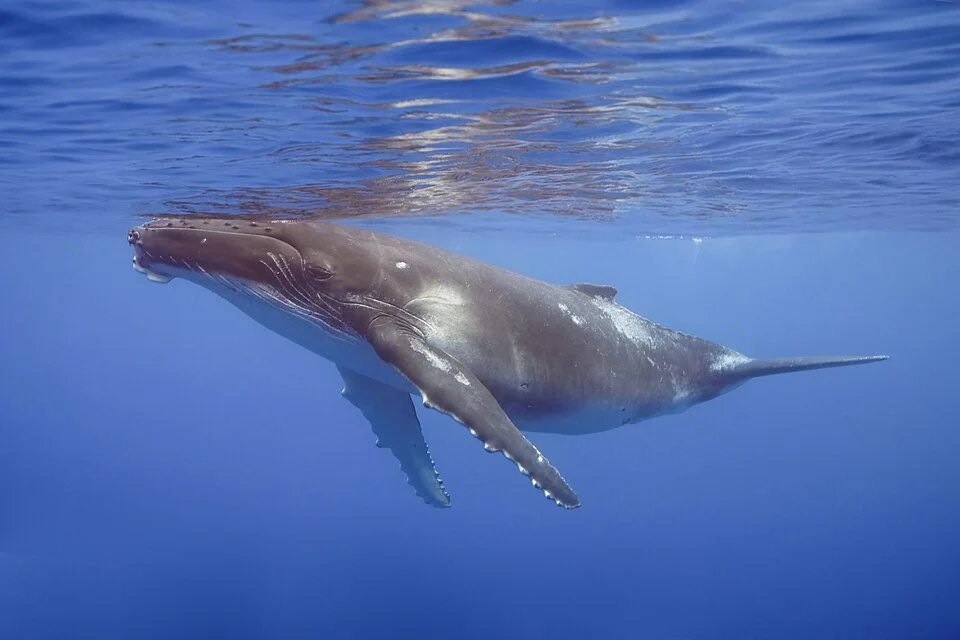
Juvenile Humpback Whale. Wikimedia Commons.
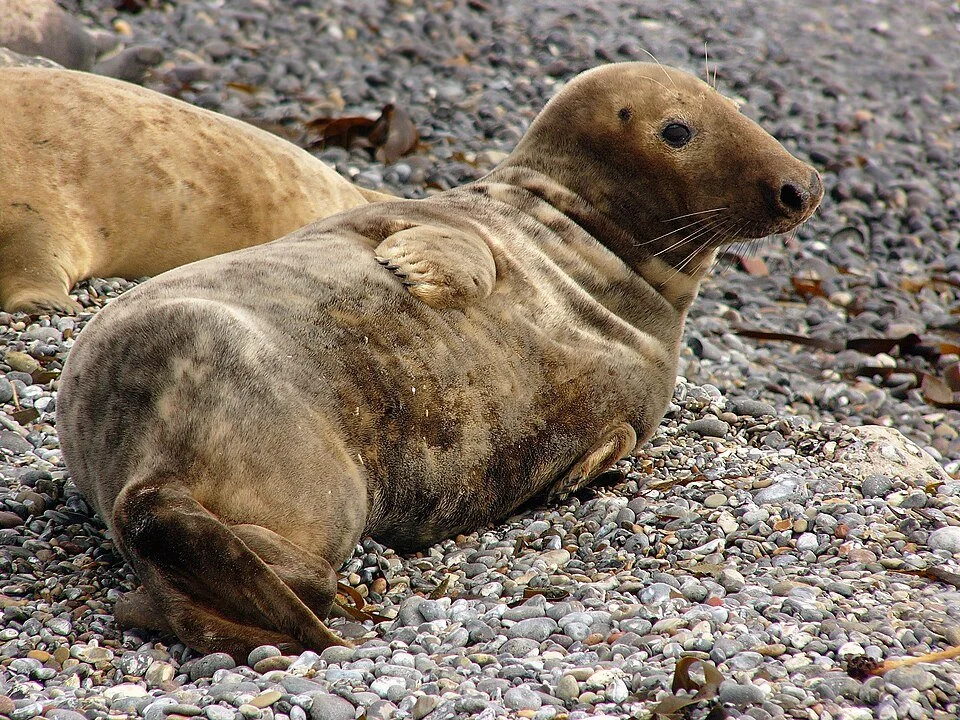
Grey Seal. Wikimedia Commons.
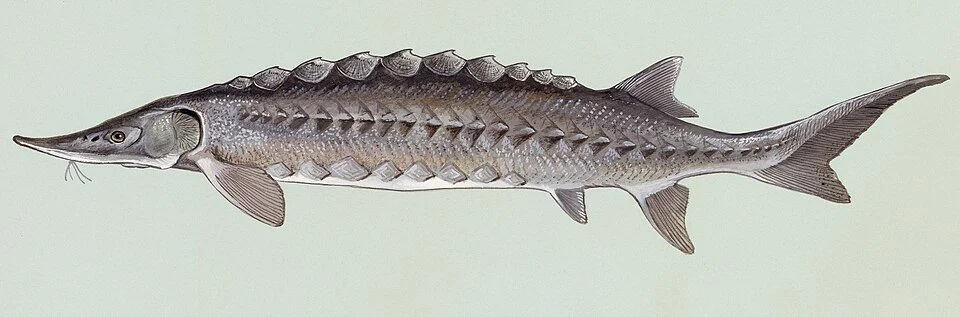
Atlantic Sturgeon. Artwork Commissioned by Fish and Wildlife Service. ca. 1970s. Wikimedia Commons.
We are coastal and woodland people, our lives revolve around balance within both settings. As such we are also instinctively tasked with the duty to protect both environments, like our ancestors before us that fought bravely to protect our ancient ways of life; we must do the same now to hold onto what is most precious and sacred. By becoming the bridge for wildlife and its water ways to bring alert and attention to their needs of survival. By not doing so, one cannot call themselves human creating a harmful effect on our oceans. Simple walks on the shore line and collecting the trash does wonders for the wildlife that lives there. Turtles wouldn't get tangled in plastic strings or small fish and crabs wouldn't get trapped in bottles or cans. The list of how to clean and protect our waters goes on and on, and at the end of the list the main goal is always the same: "keep our oceans clean, take out what you bring in"
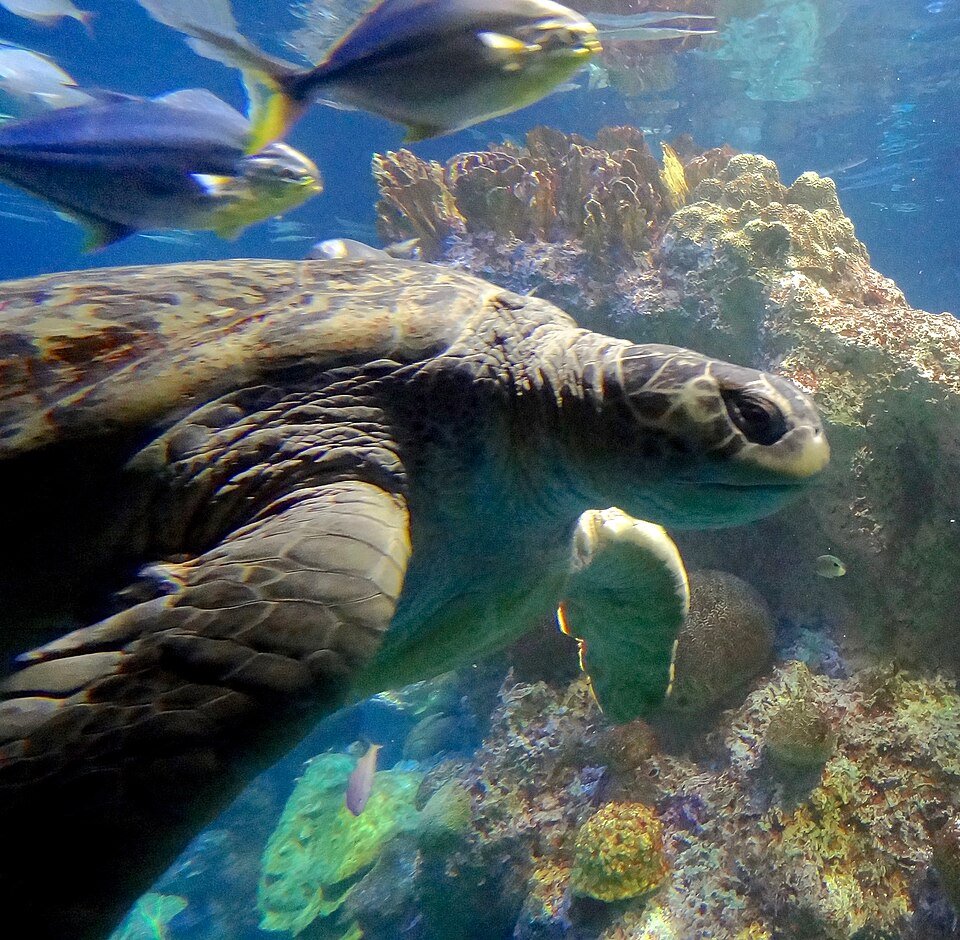
Myrtle The Green Sea Turtle at The New England Acquarium. (Myrtle is 100 years old and 500 pounds and has been at the acquarium since 1970. ) Wikimedia Commons.
FUN FACT: The Tomaquag Museum has partnered with multiple foundations that actively participate in the health and well being of our waterways.
Each of these organizations and government deprtments have played an extremely important role in keeping our oceans, lakes, and rivers clean along with sharing important historical information.
Narrow River Preservation Association